Foundations of Healthy Eating
Healthy eating is not a strict set of rules or a “perfect” way to eat. It is a flexible approach that supports health, wellbeing and everyday life, taking into account preferences, routines, culture and individual needs
We have detected that you are located in . Do you want to switch to the local site?

© via Canva.com
Nutrition Guide. Sinead O'Donovan, Dietitian and Performance Nutritionist, RD, MSc.
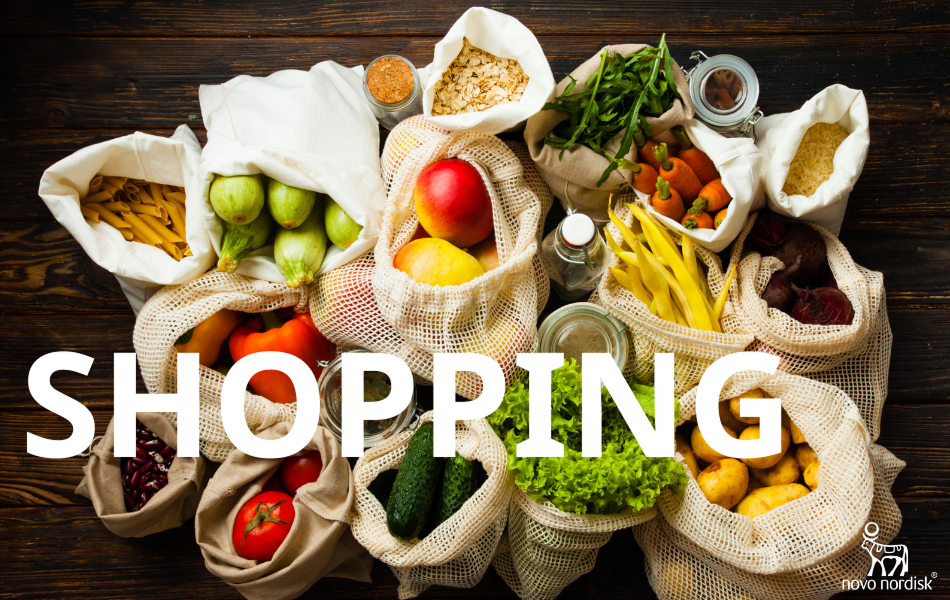
Food shopping plays a big role in everyday eating habits. What you bring into your kitchen can make balanced meals easier and more convenient throughout the week.
Planning ahead can help take the pressure off food choices. Having a rough idea of meals and snacks before shopping can save time, reduce decision fatigue and make supportive choices easier during busy weeks.
Food shopping doesn’t need to be perfect. Having nourishing options available most of the time supports healthy eating patterns, while still leaving space for flexibility and enjoyment.
Being organised can make healthy eating feel more manageable. When meals and snacks are planned in advance, it’s often easier to stick with intentions and avoid relying on convenience options.
Download your Shopping List Guide here
Lentils, beans, rice, oats, nuts, spices and tinned fish are handy cupboard staples.
Food labels provide us with important information about food products. The ingredients in foods are listed on the food label in descending order. The ingredient of the highest quantity is placed at the top of the ingredient list and the ingredient of the lowest quality is at the bottom of the list.1
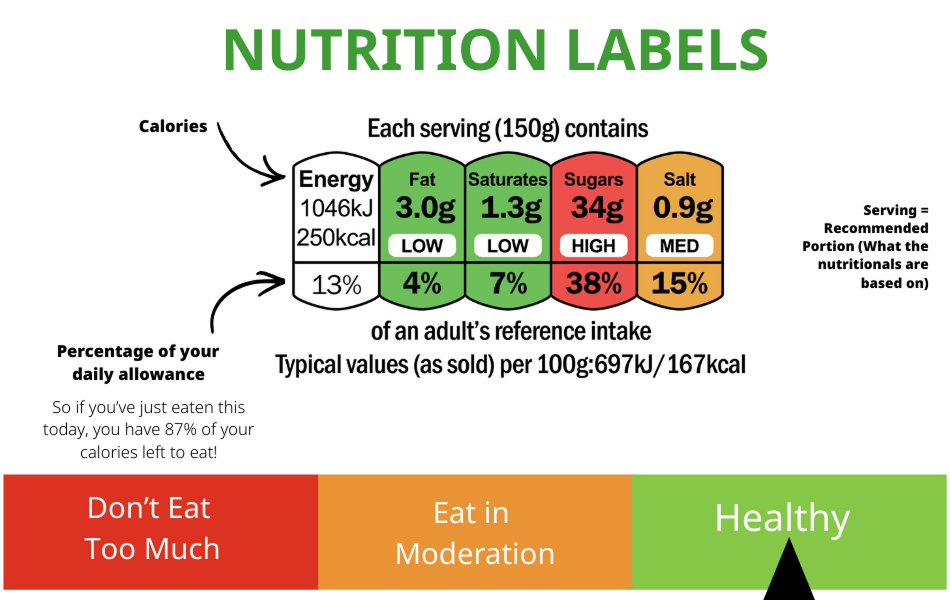
Pre-packed foods in Ireland and the UK must have a nutrition label1 usually found on the back or side of the packaging. This declaration is designed to help you make informed, healthier food choices by providing a breakdown of the food's composition.
© via Canva.com
Adapted from: Source: Nutritional Labelling | ALDI IE
Many manufacturers use a voluntary colour-coded "traffic light" system on the front of the pack to highlight levels of fat, saturates, sugars, and salt:
Red- indicates that the food is high in something we should try to reduce in our diet. Having these occasionally is ok but it is important not to consume them too often.
Amber- indicates that the food is not high in fat/sugar/salt. It is ok to eat the food regularly.
Green- indicates that the food is low in fat, sugar or salt. The more green lights on a food label, the healthier the food and a good option to eat daily.
Foods will have a mixture of red, amber and green colours. Try choosing foods with more greens and ambers and less reds.
Some food manufactures will not use the colour system. Download a Food Shopping Card from IrishHeart.ie here: https://irishheart.ie/publications/food-shopping-card/ to help you interpret the nutritional content of the food item.
Concerns about food cost can make healthy eating feel inaccessible, but nutritious choices do not need to be expensive.
Focusing on basic, versatile foods often supports both health and budget.
Cooking for others can make it difficult to meet individual nutrition needs.
Healthy eating can be adapted to suit different preferences within the same household.