Foundations of Healthy Eating
Healthy eating is not a strict set of rules or a “perfect” way to eat. It is a flexible approach that supports health, wellbeing and everyday life, taking into account preferences, routines, culture and individual needs
We have detected that you are located in . Do you want to switch to the local site?

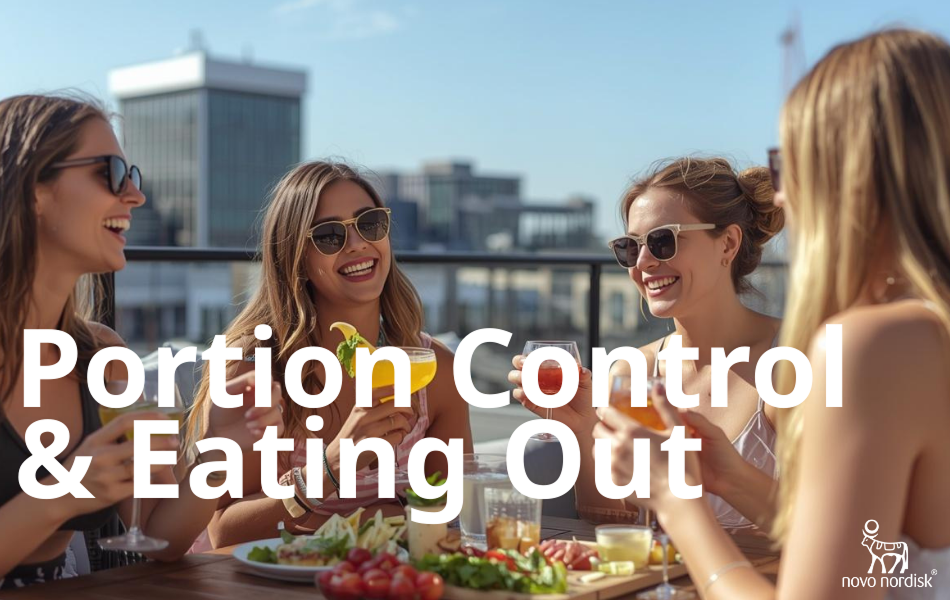
© via Canva.com, AI Generated.
Nutrition Guide. Sinead O'Donovan, Dietitian and Performance Nutritionist, RD, MSc.
Being aware of portion sizes can help support health and weight management over time. Regularly eating too much or too little of certain foods may affect energy levels, appetite, weight and overall health.
Portion needs vary from person to person and depend on factors such as age, body size, health, activity levels and lifestyle.
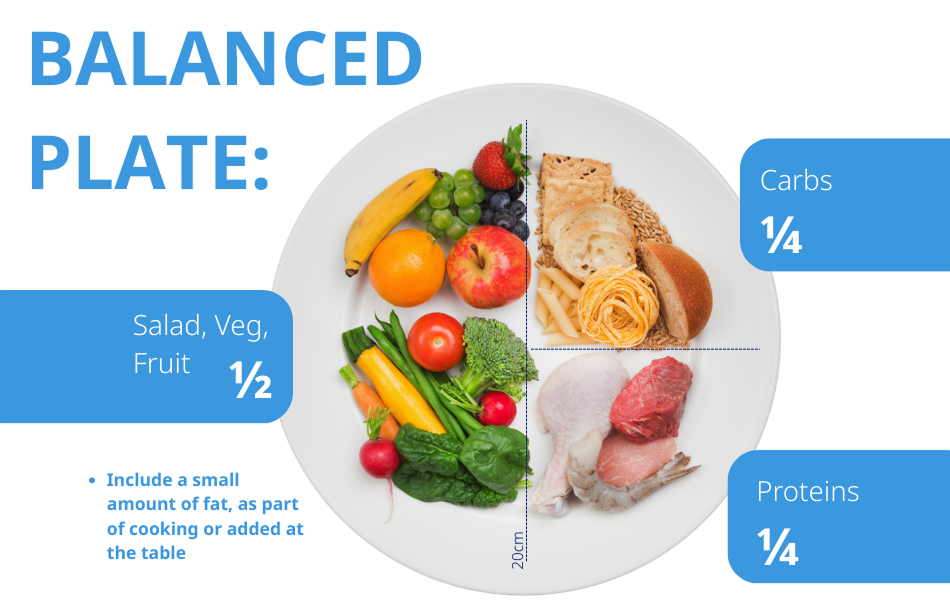
The balanced plate is a simple, visual way to portion meals without weighing, measuring or tracking food. It focuses on building meals that are balanced, nourishing and satisfying.3
A balanced plate generally includes:
A small amount of fat, included as part of cooking or added at the table
© via Canva.com
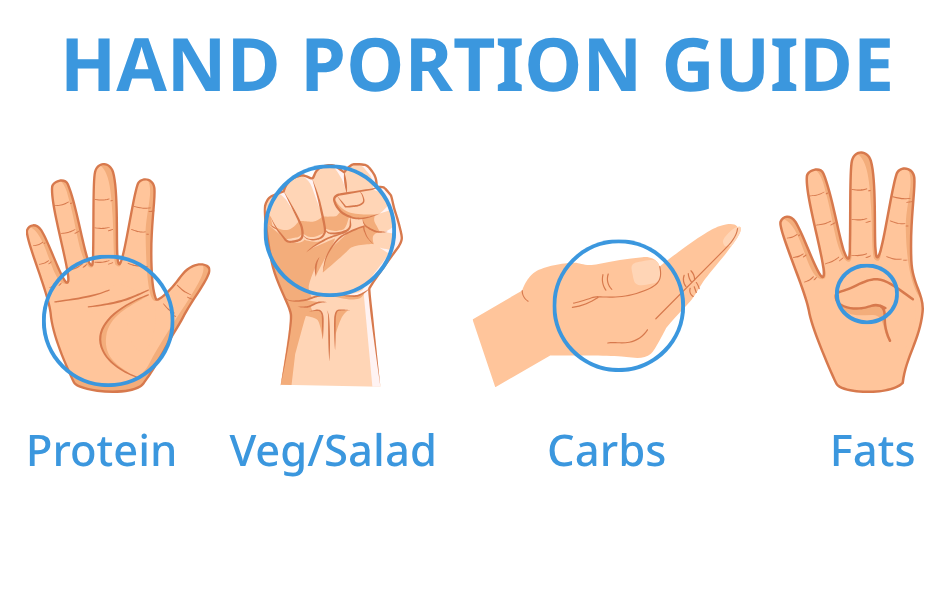
Hand portions are a simple way to estimate portion sizes without weighing or measuring food. Using your own hand as a guide helps tailor portions to your body size and individual needs.
As a general guide:
© via Canva.com
This approach supports portion awareness while keeping meals flexible and easy to manage day to day.
Eating out is a normal part of life and can fit into a healthy eating pattern. Meals in cafes and restaurants are often larger than those prepared at home, so being mindful of portion sizes can be helpful.
Rather than focusing on strict rules, simple, flexible strategies can support both balance and enjoyment when eating out.
Eating out does not require restriction or compensation at later meals. What matters most is your overall pattern of eating over time, not any single meal.
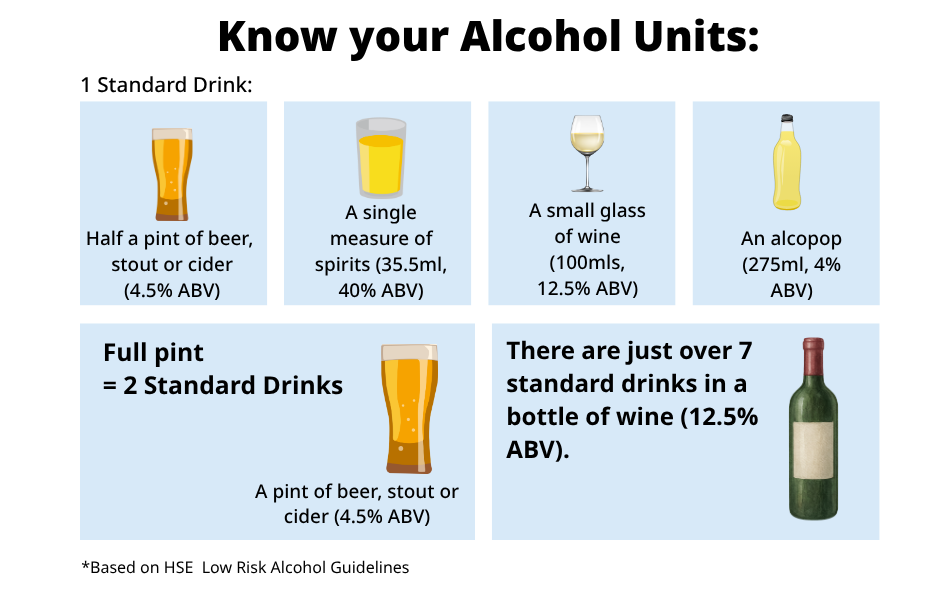
Alcohol isn’t essential for health and provides energy (calories) without nutritional benefit. These calories can add up over time, especially if alcohol is consumed regularly, and may contribute to weight gain.4,5
© via Canva.com
Alcohol unit guidence taken from HSE: https://www2.hse.ie/living-well/alcohol/health/improve-your-health/weekly-low-risk-alcohol-guidelines/
Alcohol can also affect appetite, food choices and sleep.4,5 It may make it harder to notice hunger and fullness cues and can disrupt sleep, which can influence energy levels and eating patterns the following day.
If you choose to drink, being mindful of how often and how much you drink can support weight management and overall health.6
Tips for managing alcohol intake:7
Alternate alcoholic drinks with water
Weekends often look different to weekdays, with changes in routine, social plans, eating patterns and alcohol intake. This is normal and part of everyday life.
More relaxed schedules, meals out or drinks with friends can sometimes lead to higher energy intake over the weekend. Over time, large differences between weekdays and weekends can make weight management feel more challenging.
Rather than aiming for perfection, focusing on a few simple habits can help support balance:
What matters most is the overall pattern of eating and drinking over time. Small, consistent habits across both weekdays and weekends are more supportive of long-term health and weight management.